

Why is PIR sandwich panel the ultimate solution for high-standard building envelopes?
In modern high-end industrial plants, cold chain logistics, and commercial buildings, PIR sandwich panel with their low thermal conductivity (as low as 0.020 W/(m·K), excellent flame retardancy meeting Class B1/FM certification, and physical stability due to their high closed-cell ratio, have become the preferred choice for high-standard building envelope systems, replacing traditional insulation materials.
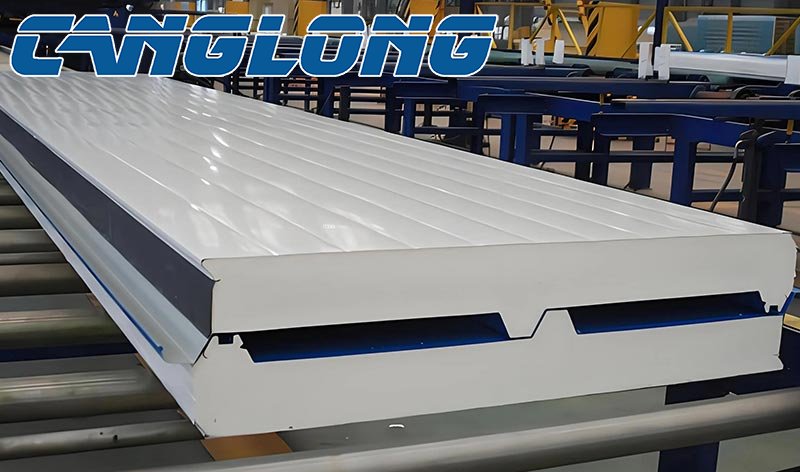
Evolution of Building Envelope Materials and the PIR Replacement Trend
With the advancement of global carbon neutrality policies, the improvement of building energy efficiency standards, and increasingly stringent fire protection requirements for industrial real estate by insurance companies, global building envelope systems are undergoing a profound material iteration.
1. Fundamental Breakthrough in Flame Retardant Mechanism and Molecular Structure
Traditional PU panels are prone to pyrolysis and rapid combustion at high temperatures. PIR (polyisocyanurate), by increasing the isocyanate index, forms a stable triazine ring structure under high-temperature catalysis. This highly cross-linked cyclic molecular network endows PIR with extremely strong thermal stability. When exposed to open flame, the surface rapidly carbonizes to form a dense protective layer, blocking oxygen penetration and inhibiting flame spread, easily meeting China's Class B1 flame-retardant standard and complying with the stringent international FM fire resistance certification.
2. Thermal Conductivity Control and Life Cycle Energy Efficiency
PIR core material typically has a closed-cell rate exceeding 95%, composed of tens of thousands of closed micropores, minimizing gas convection heat transfer. Compared to rock wool sandwich panels, PIR can achieve the same insulation performance with a thickness reduction of nearly 40%, significantly reducing the wall's self-weight and gravity load, while increasing the actual usable area of factories and cold storage facilities.
3. Excellent Water Absorption Control and Structural Stability
Rock wool and other fibrous insulation materials readily absorb water in humid environments, leading to a sharp increase in thermal conductivity, loss of insulation performance, and internal corrosion. EPS material is prone to physical deformation under long-term temperature cycling. PIR possesses natural hydrophobic properties (water absorption rate <1%) and extremely high compressive and shear strength, maintaining its shape and preventing delamination even under extreme temperature changes.
PIR Performance Comparison with Mainstream Enclosure Core Materials
| Feature | PIR Sandwich Panel | Standard PUR Panel | Rock Wool Panel | EPS Panel |
| Thermal Conductivity (W/m·K) | 0.020 – 0.023 | 0.024 – 0.026 | 0.038 – 0.045 | 0.035 – 0.040 |
| Fire Reaction Rating | Class B1 / FM Approved | Class B2 / B3 | Class A (Incombustible) | Class B2 / B3 |
| Moisture Absorption | < 1% (Hydrophobic) | < 2% | High (Absorbs Water) | High |
| Structural Rigidity | High | High | Moderate | Low |
| Best Application | High-end commercial, cold storage, cleanrooms | Standard industrial warehouses | High fire-risk industrial facilities | Budget low-rise structures |
Canglong Group: Global Expert in High-Quality PIR Sandwich Panel Manufacturing
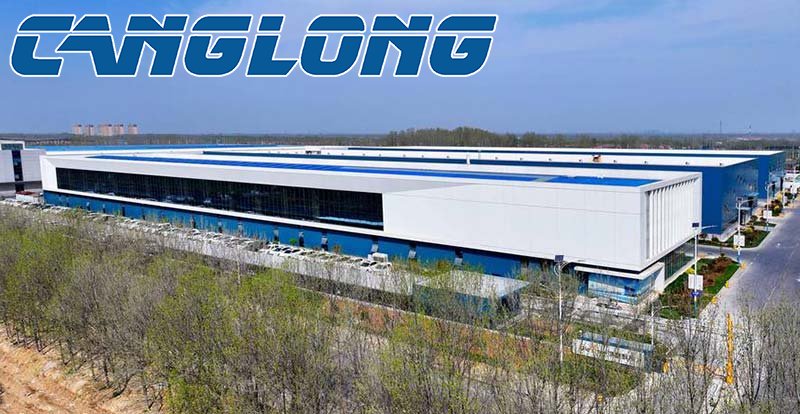
As a one-stop manufacturing service provider specializing in steel structure buildings and high-end enclosure systems, Canglong Group boasts industry-leading continuous automated production lines for PIR sandwich panels and a rigorous technical R&D system.
Continuous High-Pressure Foaming Process: Canglong Group utilizes imported continuous high-pressure foaming production lines, achieving micron-level numerical control adjustment of foaming temperature, ratio, and pressure. This ensures uniform PIR core material density, no foam voids, and 100% adhesion between the panel and the color steel surface layer.
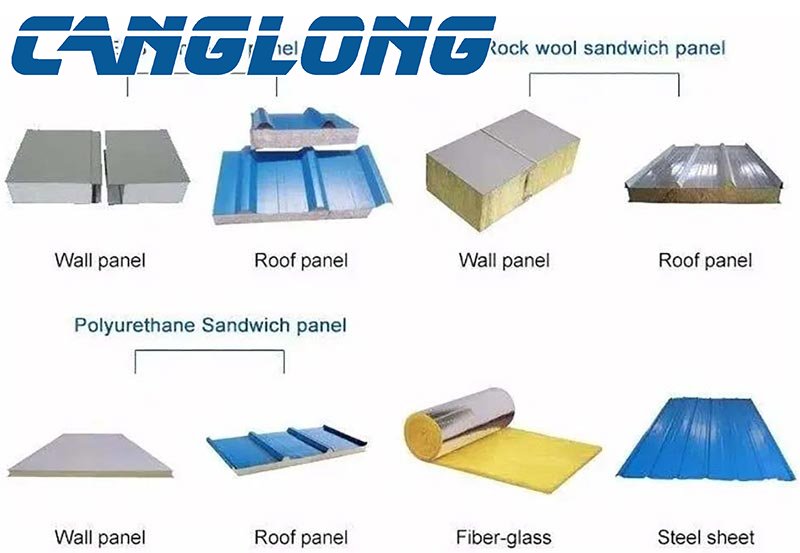
Precision Tongue-and-Groove Joints and Leak-Proof Design: Canglong PIR sandwich panels offer concealed screw (fastener) wall panels and high-wave roof panels, employing a precision tongue-and-groove interlocking structure and high-grade sealing strips to completely eliminate rainwater leakage and thermal bridging.
Global Standards and Customized Delivery: Panel thicknesses range from 50mm to 200mm, supporting customization of various surface materials such as aluminum-zinc plating, PPGI, and anti-corrosion fluorocarbon coatings. Strictly compliant with international testing standards such as ISO and CE, they can withstand various harsh climates in equatorial heat and humidity, high-salt-spray coastal areas, and frigid regions.
One-Stop Engineering Collaboration: From enclosure scheme layout optimization and automated CNC production to overseas container packaging and on-site installation guidance, Canglong Group provides global clients with a seamless end-to-end construction experience.


