

Why sandwich panels are the fastest-growing building envelope solution?
Because sandwich panels simultaneously address five core issues: construction speed, cost control, energy efficiency, fire safety, and global adaptability, making them the most cost-effective building envelope system in modern steel structure buildings.
Driven by global trends of industrialization, logistics, and green building, sandwich panels are rapidly replacing traditional brick walls, concrete walls, and single-layer color steel panels, becoming the mainstream choice for industrial plants and public buildings.
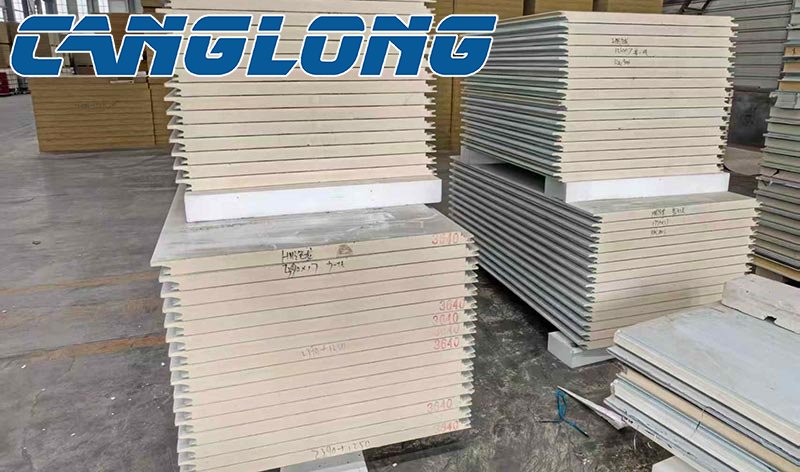
What changes are happening in the global construction industry?
Past construction methods relied heavily on concrete structures, on-site wet work, long construction cycles, and high labor costs. However, three major trends have emerged in the current global market:
1. Increasingly shorter construction periods
Factory, warehouse, and e-commerce logistics centers require rapid production.
2. Rising energy costs
Building energy conservation has become a long-term cost control focus for enterprises.
3. Rising labor costs
Traditional construction methods are becoming increasingly uneconomical.
In this context, sandwich panels have become a key material for upgrading industrial buildings.
What is a sandwich panel?
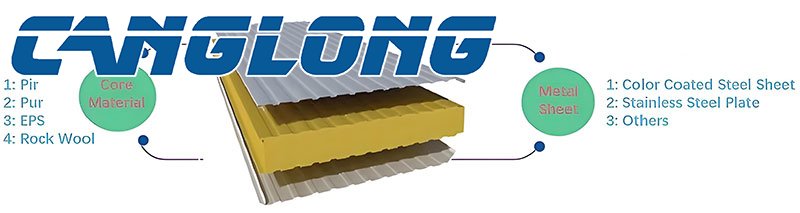
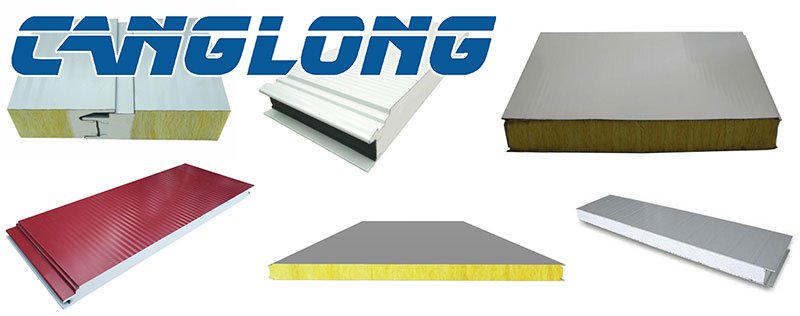
Sandwich panels are a three-layer building material:
Outer steel sheet (color-coated steel sheet/galvanized steel sheet);
Middle insulation core material (PU/rock wool/PIR/EPS);
Integrated composite structure.
Its core feature is the integration of structure, insulation, decoration, and fire resistance.
Why is sandwich panel growth so rapid?
1. Extremely fast construction speed
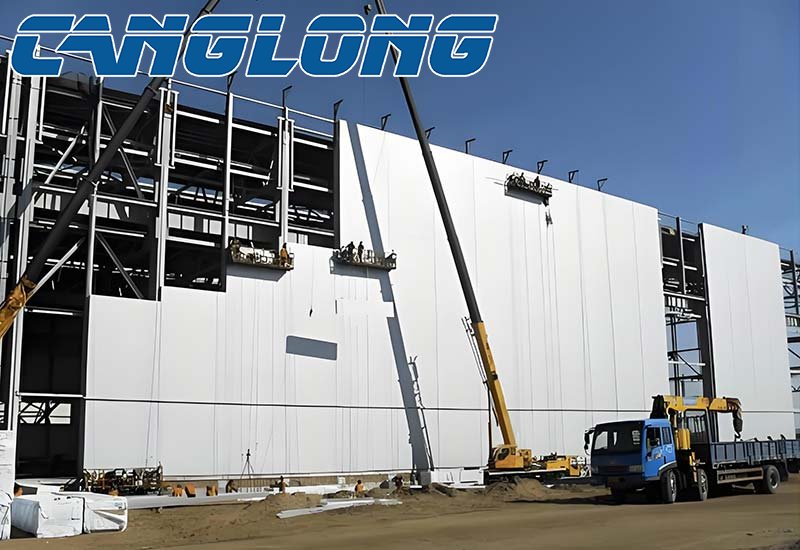
Sandwich panels are prefabricated in factories and installed on-site. Compared to traditional construction methods, the construction cycle is shortened by more than 50%, requiring no wet work and allowing for immediate use.
In industrial projects, time is cost, and sandwich panels directly increase the speed of return on investment.
2. Lower overall cost
Although the unit price may be slightly higher than ordinary walls, the overall cost is lower. It reduces labor, shortens construction time, reduces foundation load, and reduces subsequent maintenance.
3. Energy-saving performance becomes a necessity
Against the backdrop of rising energy prices, building energy efficiency is crucial. The core advantage of sandwich panels are their excellent thermal insulation performance, reducing air conditioning energy consumption and carbon emissions. They are particularly suitable for the high-temperature regions of Southeast Asia, the hot regions of the Middle East, and the cold regions of Europe.
4. Continuously Upgrading Fire Safety
Modern industrial buildings have increasingly stringent fire safety requirements. Common systems include rock wool sandwich panels, PU-edged rock wool panels, and PIR fire-resistant polyurethane panels. These meet the fire safety standards of different countries (EN / ASTM / ISO standards).
5. Strong Adaptability
Sandwich panels can be quickly adapted to different regions:
Wind load design (Africa/Island regions);
Snow load design (Nordic/Canada);
High-temperature insulation design (Middle East/Southeast Asia);
Corrosion resistance design (Coastal regions);
One system, globally applicable.
6. Industrial Standardization Drives Growth
Modern industrial buildings are becoming standardized, warehouses are modularized, factories are replicated, and logistics centers are rapidly expanding. Sandwich panels are naturally compatible with standardized building systems, allowing for rapid project replication.
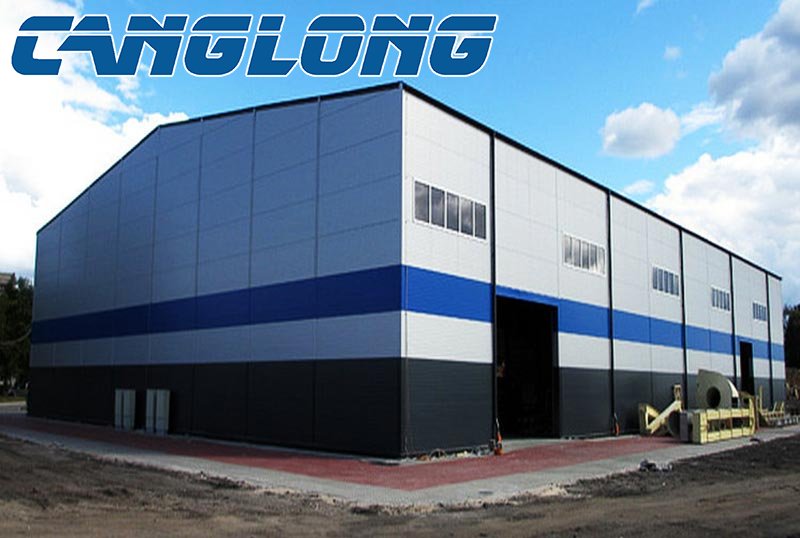
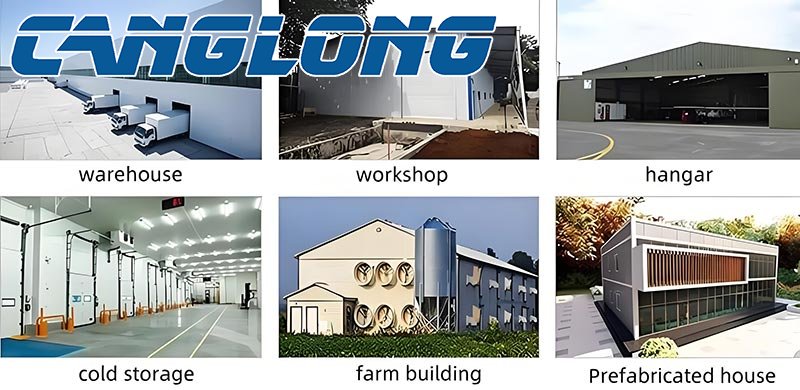
Main Application Areas of Sandwich Panels
Sandwich panels are widely used in the global construction industry:
*Industrial Buildings
*Industrial Plants
*Manufacturing Workshops
*Automotive Factories
*Electronics Factories
*Logistics
*Cold Chain Warehouses
*E-commerce Warehousing
*Cross-border Logistics Centers
*Public Buildings
*Gymnasiums
*Exhibition Centers
*School Buildings
*Special Buildings
*Food Processing Plants
*Pharmaceutical Cleanrooms
*Data Centers
Why Will Growth Continue?
The growth of sandwich panels will continue to accelerate over the next 10 years, mainly due to:
The continued shift of global manufacturing to developing countries;
Increasingly stringent green building regulations;
The need for faster delivery of industrial buildings;
Digital factories driving standardized construction;
Continuously rising energy costs.
The construction industry is transitioning from the civil engineering era to the prefabricated era, and sandwich panels are one of the core materials in this transformation.
Conclusion
The reason sandwich panels have become the fastest-growing building envelope solution is essentially because they simultaneously solve five major issues: speed, cost, energy, safety, and global adaptability.
Against the backdrop of rapid development in global industrial construction, sandwich panels are no longer just a material, but a standardized solution for modern steel structure buildings.
In the future, they will continue to dominate the market for building envelope systems in industrial plants, logistics warehouses, and public buildings, becoming one of the essential basic materials for global industrialized construction.


