

Why are PU panels the preferred choice for factory construction in Thailand?
The core challenge of building a factory in Thailand is coping with the tropical climate. Thailand experiences high temperatures year-round, a long rainy season, and frequent typhoons in some areas. Factory buildings need to be insulated to reduce energy consumption, be moisture-proof, wind-resistant, and durable, while also balancing construction speed and cost. Polyurethane sandwich panels (PU panels), with their strong insulation, good moisture resistance, and quick installation, have become the preferred solution for industrial projects in Thailand.
Three Major Challenges of Factory Construction in Thailand
High Temperatures and High Energy Consumption: Summer workshop temperatures in Thailand often exceed 40°C. Air conditioning/ventilation energy consumption accounts for more than 30% of operating costs. Traditional corrugated steel panels have poor insulation, resulting in high electricity bills.
Dampness Risk During the Rainy Season: High humidity easily leads to mold growth on walls and equipment corrosion. Ordinary insulation materials lose their insulation after absorbing water, and may even cause structural problems.
Tight Construction Schedules: Thailand's manufacturing industry is rapidly upgrading, requiring factories to be operational quickly to seize market share. Traditional building materials are slow to install, potentially delaying business opportunities.
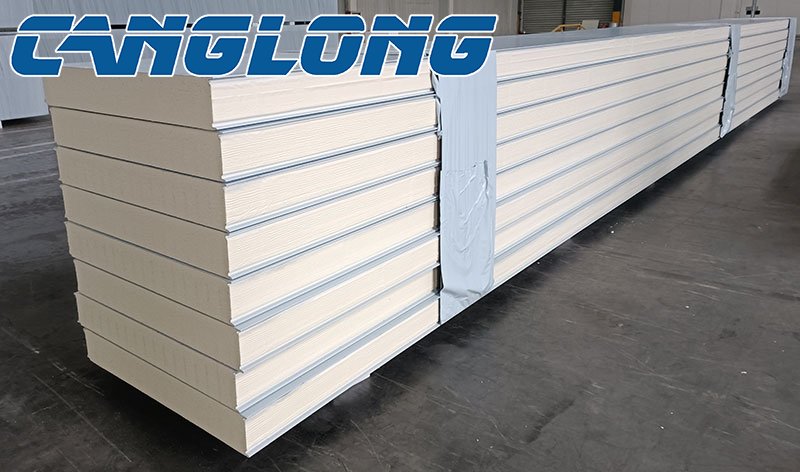
Why is PU panels the Preferred Choice for Thai Factories?
1. Insulation King
The core of PU board is closed-cell polyurethane foam, with a thermal conductivity as low as 0.022-0.028 W/(m·K) (only 60% of EPS board and 70% of rock wool board). Simply put: at the same thickness, PU board's insulation effect is more than 3 times that of ordinary color steel board.
Actual test data: A Thai electronics factory built its workshop using PU board. In summer, the indoor temperature was 8-10℃ lower than that of traditional color steel board buildings, the air conditioning load was reduced by 40%, and the annual electricity cost was reduced by 20% of the construction cost.
2. Moisture-proof Expert
PU panels have a closed-cell rate >90%, and almost no water absorption (water absorption rate <1%). Even in the high humidity environment of the rainy season, it will not absorb water like rock wool or EPS. This prevents insulation layer failure and also prevents mold growth on walls and corrosion of metal components.
Suitable for Thai scenarios: Food factories, electronics factories, and textile factories, PU board is a moisture-proof guarantee.
3. Fast Construction
PU panels are modular sandwich panels. The panels are prefabricated in the factory, requiring only splicing and fixing on-site. 300-500㎡ can be installed per day.
Case Study: A car parts factory in Rayong Province, Thailand, built a 2000㎡ factory using PU panels. From groundbreaking to production, it took only 85 days, one month ahead of schedule.
4. Cost Estimation
Initial Costs: PU panels are slightly more expensive than EPS panels (approximately 15%-20% more expensive), but less expensive than rock wool panels.
Long-Term Cost Savings: Good insulation → lower electricity costs; strong moisture resistance → fewer maintenance. Lifespan up to 20 years, compared to only 10-15 years for ordinary color steel panels; total cost decreases by 10%-15% over a 10-year period.
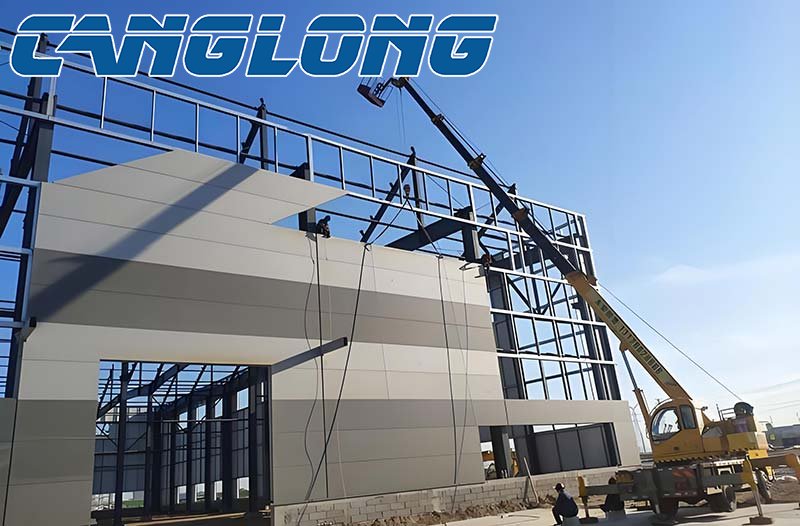
Advantages of Choosing PU Panels for Thai Factories
Wind and Weather Resistance: Lightweight and high-strength, combined with galvanized steel panels, it can withstand the common 10-12 level gusts in Thailand.
Fire Safety Compliance: Thailand's Ministry of Industry requires factory insulation materials to be at least B1 grade. PU panels can achieve B1 grade by adding flame retardants, meeting the needs of most industrial scenarios.
Aesthetics and Flexibility: Panel colors and textures are optional (such as imitation stone and metallic colors), adapting to modern factory appearances. Custom-designed curved and irregularly shaped walls are also available.
Conclusion
When building a factory in Thailand, PU panel may not be the cheapest option, but they are the most suitable. With their significant advantages of heat insulation and energy saving, moisture resistance and durability, and rapid installation and production, they help owners solve the core pain points of high-temperature and high-humidity environments, making factories not only affordable to build but also highly functional. Whether in electronics, food, automotive parts, or warehousing and logistics, PU panels can be an efficient partner for Thailand's industrial upgrading.
Latest News
-
How the pre-engineered building market is reshaping industrial space
-
Why are PU panels the preferred choice for factory construction in Thailand?
-
How to build a three story office building in the Philippines in 30 days?
-
Cold chain integration and steel structure solutions in Argentine beef exports
-
Canglong steel structure solution for a 5000㎡ factory in Chile
-
Advantages of metal surface insulated sandwich panels for steel plants


